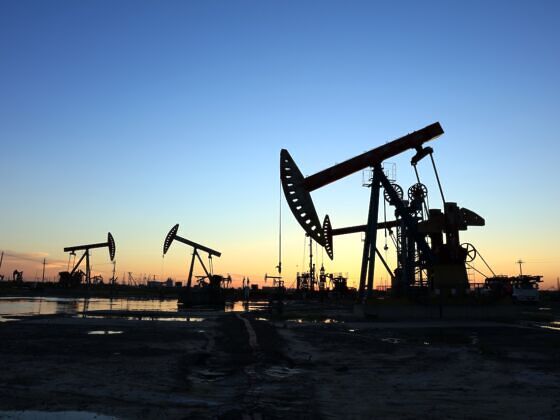
Photo: Azfar Hakim
Last week, Matador reported breaking news in the Wiwa v. Shell case, explaining that the case 15 years in the making had first been rescheduled and then postponed indefinitely. In that article, we wrote:
“Initial unsubstantiated rumors indicated that Shell may have agreed to settle the case out of court by offering financial reparations without ever actually admitting, much less accepting, any responsibility for its role in the deaths of the activist Ken Saro-Wiwa and others, as well as other human rights and environmental violations.”
Turns out those rumors–which we’d first heard from reputable sources with close ties to the case–were true.
This afternoon, Riptide Communications issued a press release stating that Shell settled with the plaintiffs in the Wiwa v. Shell case for a total of $15.5 million USD.
That amount will be distributed amongst 10 plaintiffs, will cover some of the legal costs they incurred, AND establish a trust fund for the Ogoni people whose communities have been decimated by Shell’s actions in the Ogoniland region of Nigeria.
Now I’m not too good with numbers, but $15 million (about a million for every year the plaintiffs have been fighting for justice) seems a pretty pitiful sum when Shell’s most recently reported profits exceeded $31 billion USD for the past fiscal year alone. And while this figure represented a decline in the company’s profit margins compared to past years, its profit, when calculated by the hour, exceeded $4 million USD.
Yep.
$4 million every hour.
Shame on you, Shell.
While attorneys for the plaintiffs acknowledge–and rightfully so–that the settlement is a meaningful sign of the company’s acknowledgment of the human rights abuses it has perpetrated, $15 million hardly seems adequate apology.
About the Author
Related Posts
8 Comments... join the discussion!
-
-
15 million isn’t too bad. When an American pilot accidentally bombed a Cambodian city back the ’70s they paid out a few hundred dollars for each fatality to the survivors.
↵ -
I think it can be viewed as a victory of sorts. Shell have tacitly admitted responsibility, and the plaintiffs have received a pay-out that whilst comparatively small, is also not insignificant. I guess the alternative would be to continue fighting the massed ranks of shell lawyers, getting continually stonewalled, and possibly having to drop the case at some point in the future anyway because of lack of funds.
↵ -
Wow, that pay-out is less than 4 hour’s worth of Shell profit. The company profits from operating in Ogoni land 24-hours/day for 365 days/year. I mean, shouldn’t they at least get the equivalent of 1 day’s profit!?
Though it is setting a precedent in corporate accountability, I wonder what it signals to other industry behemoths? Does it say, “you will have to pay millions, so clean up your act” or does it say, “just hold out, you won’t have to see the inside of the court.”
Indeed, a victory it is, but a bitter-sweet one.
↵ -
15 million is so paltry when taken in context of Shell’s hourly profit.
For these slug-sucking bastards to take human lives seriously they mus be punished to a degree that makes them flinch.I have mixed feelings; should the settlement amount be reflective of how much the victims deserve or how punished Shell should be?
Crimes against humanity, anyone?
↵ -
Thanks for your comments, everyone, which have tapped into the complexity of this outcome. I don’t think anyone should judge the plaintiffs for accepting the settlement that was offered. But I do think Shell should be judged for its acts, which it now effectively gets to sweep under the rug so it can move on to keep making profits.
↵ -
On the other hand what do the people that received the settelment think of the amount. Walk a mile in their shoes. This may seem like a world changing event to them.
↵


