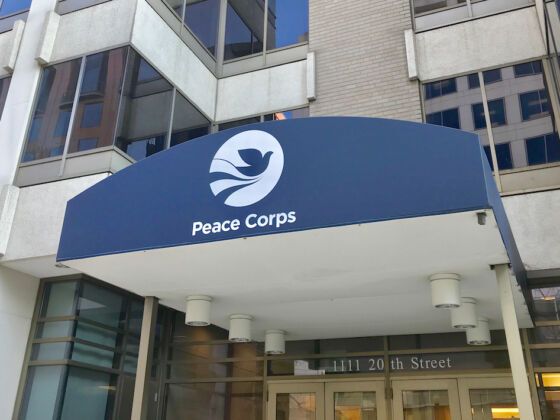
How to Apply for the Peace Corps

03/3/10  Print This Post Print This Post    21 Comments   Popular   Written by JoAnna Haugen
    Share
March 1-7 is Peace Corps Week, and 2010 marks the 49th anniversary of the Peace Corps. Matador associate editor JoAnna Haugen served in the Peace Corps. For those interested in applying to the Peace Corps, she gives insider advice about how to make the most of the application process.

Serving in the Peace Corps is a two-year commitment on the part of both the volunteer and the U.S. government. It requires time, finances, and a sincere interest to embark on a long-term volunteer career, and in order for a volunteer to be most effective, it is important the application process be taken seriously.

According to the Peace Corps website, the application process generally takes six months to a year, but it can take much longer in some instances. Regardless of how long the process takes, realize that going through the paperwork, interviews, and appointments while applying for the Peace Corps is good practice in patience and flexibility—both of which you will need to perfect before beginning your service.

Here is what you can expect if you apply:

The Research

Before you begin the application process for the Peace Corps, do your research. Read the Peace Corps website thoroughly, follow blogs of current Peace Corps volunteers, attend informational meetings, and ask questions of returned volunteers and recruiters.

Peace Corps Connect is an online community of future, current, and returned volunteers who are interested in sharing information and providing support.

The Application

You’ll have to fill out an application, which details education, employment, and volunteer history and will likely take several sessions to complete. Two essays and three references are required. You also need to submit a copy of your college transcripts, information about relevant financial history such as student loans and mortgage obligations, and basic information about your medical history (both physical and psychological).

The Interview

After the Peace Corps has received and reviewed your completed application, you’ll be contacted for an interview if recruiters feel you could be qualified to volunteer. You will interview with a recruiter who is most likely a returned Peace Corps volunteer, so feel free to ask tough questions about the experience.

During the interview, the recruiter will ask you about your educational and volunteer background. The recruiter will want to know about your language and technical skills and interests. You’ll touch on your ability to handle changing circumstances and stressful situations.

“It is unbelievably important for you to be completely honest during this interview.”

It is unbelievably important for you to be completely honest during this interview. Though it is true that flexibility and the ability to adapt easily are good characteristics to have as a volunteer, if you aren’t completely honest and upfront about your interests, abilities, fears, and motivations for applying, you may be setting yourself up for unsuccessful service before you’ve even left the country.

Many people think they can go anywhere and do anything and be completely happy, but this just isn’t the case. Be honest about how you might respond to different situations such as loneliness, unclean conditions, and unusual public transportation.

The Nomination

You need a US passport. Photo: Tom Purves

After your interview, your recruiter will determine if you’re fit to be a volunteer. You’ll receive a vague assignment with a general geographical region and area of work, as well as a tentative departure date. This is by no means final—my location and job were changed three times before I received a definite assignment.

The Medical, Legal, Suitability, and Competitive Reviews

At this point you’ll receive paperwork for medical and legal clearance. The medical review requires a full physical examination, a dental exam with x-rays, and an eye exam. You may also be asked to complete a psychological evaluation. Try to complete the medical review within 45 days, and, if for any reason your medical status changes (for example, I had an emergency surgery after being medically cleared), contact Peace Corps immediately to update your clearance forms.

The legal review requires you to disclose any financial obligations, previous arrests and convictions, and obligations you have to dependents.

Once these are complete, a placement officer will contact you regarding placement matches that coincide with any medical needs you have and your ability to leave for service on specific dates.

The Invitation

The day will come when you finally receive the coveted invitation in the mail with a solidified country of service, job title, and date of departure. If you accept, you’ve just made it through the first laborious step of becoming a Peace Corps volunteer.

That said, you don’t have to accept the invitation.

There is an unwritten rule about declining invitations.

Photo: LizMarie

You can decline an invitation once with a sound reason about why you don’t want to serve in that location or in that job capacity. Once you receive a second invitation, you should consider long and hard about declining. Though you need to commit 100% to the Peace Corps, you should have had enough conversations and provided enough background information that an invitation should fit you well on the first or second try.

If you decline too many invitations, there is a possibility that you’ll be tossed back into the application pool.

The Pre-Departure

You’ll have approximately two or three months between invitation to departure. In that time, you’ll receive a packet of information about your country of service and a tentative packing list. You’ll also receive your e-ticket to your stateside staging site, where you’ll spend three days getting information and immunizations necessary for departure.

From there, you will finally depart for your service as a Peace Corps volunteer.

Community Connection:

JoAnna provides more advice in 5 Things You Should Know Before Joining the Peace Corps. And don’t think you’re ineligible if you’re a senior citizen. Read about 84 year old Peace Corps volunteer Muriel Johnston in Seniors in the Peace Corps.


    Share

About the Author

Matador ID: joanna-haugen

JoAnna Haugen is always planning her next great adventure. A former Peace Corps volunteer in Kenya, her travels have taken her to six continents. Journey with her on her blog.

21 Comments... join the discussion!

  • Simone Gorrindo replied on March 3, 2010

    Thanks for the nitty gritty, JoAnna — very helpful.

    (Report comment)

    ↵ Reply
  • Alaina O'Brien replied on March 3, 2010

    It’s been my dream to join the Peace Corps ever since I was 17. Last year, I started the application but put it aside when I got an offer from Fulbright to teach English abroad…but I’ll definitely start the process again when I’m next stateside.

    How long did the application process take you? What work did you do in Kenya? I always find Peace Corps stories very interesting :)

    (Report comment)

    ↵ Reply
    • JoAnna replied to Alaina O'Brien on March 3, 2010

      Hi Alaina ~

      My husband and I applied in September 2003 and left for service May 2004. It didn’t take us long, but we were one of those anywhere, anything people. I was a public health volunteer and my husband did water sanitation, and while I found it rewarding, now that I understand how the process works and what the volunteer work entails, I realize that different jobs probably would have been more appropriate for both of us. I’d like to apply and serve again someday, and when I do, I’d definitely be willing to wait for a more appropriate assignment, even if it meant waiting longer to be assigned to a country and project.

      On a side note, how exciting that you’re teaching English via a Fulbright scholarship! I actually applied for one pre-Peace Corps, but when that fell through, that’s when I seriously began considering the Peace Corps.

      Cheers,
      JoAnna

      (Report comment)

      ↵ Reply
  • Tim Patterson replied on March 3, 2010

    Nice, solid overview.

    (Report comment)

    ↵ Reply
  • Trisha Miller replied on March 3, 2010

    Wonderful article JoAnna! You really make me wish I had fewer obligations in my present life – I’d up and join in a heartbeat if I could. Nice to know that there’s a pretty high upper-end age limit though, so who knows? Maybe someday……

    (Report comment)

    ↵ Reply
    • JoAnna replied to Trisha Miller on March 4, 2010

      Hey Trisha ~

      The Peace Corps has done a really good of job of recruiting older volunteers in the past few years due to the fact that they simply have more life and technical experience to offer. One of the things I most appreciate is that the Peace Corps can accommodate a variety of needs and issues. For example, when we were serving, we met an older couple who were on their third tour of service. He had some medical issues, so they had to be placed in countries and cities in those countries where medical care was never far away and more advanced than other countries, so they had been in Jamaica, some country in Eastern Europe and then Kenya, versus, say, an isolated placement in Western Africa or something along those lines.

      It’s never too late to apply. I promise.

      Cheers,
      JoAnna

      (Report comment)

      ↵ Reply
  • Lily replied on March 4, 2010

    I’m graduating from college in 2011 and my goal is to join the peace corps after I graduate. I’m worried I won’t be accepted, but thanks for the rundown so I know what to expect in the application process?

    How competitive is acceptance? I’m not incredibly picky.

    (Report comment)

    ↵ Reply
    • JoAnna replied to Lily on March 4, 2010

      Hi Lily ~

      I can’t say with any certainty how competitive it is to get into the Peace Corps. That is, I don’t have any specific numbers on how many people apply versus get into service. The most important this is that you would be a good fit with a good personality and good technical skills that fit an open assignment. Do you mind if I ask what you’re studying in college? Though there doesn’t have to be an exact match (we had someone who studied theatre in our public health group), it’s easier to place someone who has specific technical skills that the Peace Corps is looking for. For example, those who study education are a natural fit to be English teachers.

      I think the most important thing is that you’re truly passionate and interested. One girl in our group who had been a master electrician working in water sanitation ended up being one of our most successful volunteers and stayed an extra year. The definition is so vague about what makes a “good volunteer,” but having the sound technical skills or the ability to learn them is definitely a must-have quality.

      Cheers,
      JoAnna

      (Report comment)

      ↵ Reply
      • Lily replied to JoAnna on March 4, 2010

        I’m studying political science (and I seem to have picked up an anthropology minor along the way too). My goal has always been to eventually end up in international development. I do have experience tutoring English, as well as working for non-profits and an environmental law organization. I also speak (somewhat) fluent French.

        I wish I had a tangible skill, but unfortunately I was never really the engineering “type.” I guess part of it has to do with how you sell yourself. Any recommendations on how to spin my qualifications? Again, thanks for your advice. How did you find learning a new language? Did you have any familiarity with Swahili before you went?

        (Report comment)

        ↵ Reply
        • JoAnna replied to Lily on March 4, 2010

          You don’t have to be the engineering type, and, in fact, your volunteering background sounds like a great fit for teaching English or environmental education. The fact that you speak some French is also a good thing. I can’t speak for the Peace Corps, but I think you’re definitely on the right track. Like I said, the most important thing is that you be genuine and passionate. Don’t spin yourself to be someone you’re not – that’s one of the worse things you can do. Be honest. Tell your recruiter what you want to do, why Peace Corps is a natural stepping stone for you.

          I majored in public relations who did theatre and competed in public speaking in my spare time, but I’d also been a volunteer and tutor and was comfortable with traveling and ended up being a public health volunteer. You will get the technical training you need during your first 8-12 weeks of service.

          I really can’t stress enough that it is most important to be honest about what you’ve done, what you’d like to do and how that fits in with your long-term plans. Be yourself. I think you have a background that makes sense to be a Peace Corps volunteer anyway, but don’t try to spin yourself to be someone you’re not. That said, it can’t hurt to get one of your references possibly from your volunteer coordinator or your French teacher (if you’re interested in being placed in West Africa).

          I did not speak Swahili before I left. We had language training every day and spoke it at our homestay. Everyone had to pass a language test before moving to site. Additional language training was provided to those who needed it. Swahili is actually a pretty easy language to learn. It was learning the Kikuyu tribal language that was difficult for me because it was tonal.

          I hope that helps …

          Cheers,
          JoAnna

          (Report comment)

          ↵ Reply
          • Lily replied to JoAnna on March 4, 2010

            Thanks for your help! Of course I will be 100% honest when I apply. I’ve got a while but I’m already getting nervous. Thanks again.

            (Report comment)

            ↵ 
  • Heather Carreiro replied on March 4, 2010

    Great dialogue going on here. Thanks for the informative article! I looked into applying when I first graduated college, but most of the countries I was interested in going to no longer have an active program.

    (Report comment)

    ↵ Reply
  • Jordan replied on March 5, 2010

    Hi everyone – I am planning on applying within the next few years, and there’s something I’ve been wondering – does anyone know if the Peace Corps will accept recommendations written in a foreign language? I am currently studying in France and would love to have one of my French teachers write a recommendation for me. I would call and ask but it’s a little harder to call internationally, so hopefully I can find out online somehow…

    (Report comment)

    ↵ Reply
    • JoAnna replied to Jordan on March 5, 2010

      That is a great question Jordan and I don’t know the answer to it. You may either want to email the person who would be your local recruiter (based on your U.S. address), which can be found here: http://www.peacecorps.gov/index.cfm?shell=meet.regrec.

      Peace Corps is also on Facebook and Twitter, so you might want to get in touch there to get clarification.

      (Report comment)

      ↵ Reply
  • Aaorn replied on March 9, 2010

    I am soon to be a Peace Corps Volunteer. I’ll be reach my new home, Kyrgysztan, where I will be teaching English on the 29th of this month.

    Anyways, as a person still currently in the process of becoming a volunteer I think I might have some things to add.

    The application process is taking longer these days it seems. There are more applicants due to the economy, so definitely apply early. I started almost a year ago. Also, because of this it is getting a bit more competitive, or so I have heard.

    The medical application can cause some trouble. They ask for things even your doctor might fight strange. Have them do it anyway. For instance a polio vaccination when have already had one. Make sure to follow the PC’s directions to the letter, mistakes can definitely slow down the process. Same goes for all the paperwork, but the medical is especially important.

    Pre-depature is something I oddly didn’t think about. Once you accept an invitation there is actually quite a bit more paperwork to be done. Mostly simple stuff though. Packing can be stressful. Be prepared to spend a good deal of money on getting yourself set to go. I did not think of this at all, and was surprised by how much money I had to spend. Some volunteers make it near $1,000 easy. Of course, I am sure there are ways to spend less, or if you already have certain expensive items.

    The whole process is extensive, and a bit stressful. But I can’t wait for my service. I will be teaching English in a small school.

    There are many Facebook groups of current and volunteers who are either at their volunteer site or preparing to leave that could be very enlightening to those wishing to apply.

    If anyone has any questions, feel free to ask me. I could also set you up with some current volunteers.

    Good luck to all those applying.

    (Report comment)

    ↵ Reply
  • Aaron replied on March 9, 2010

    One more thing I left out.

    Pre-departure orientation is no longer 1 days but one packed day. I fly into Philadelphia on the 25th(they are getting me in early because I live to far west to make it in the day off like others in my group), have orientation in a hotel on the 26th, drive to New York and fly out on the 27th.

    (Report comment)

    ↵ Reply
  • Alburn Bailey replied on March 21, 2010

    Hi, my name is Alburn Bailey and i am from jamaica a nice island in the carribian. and it as always been my dream also to join the peace corp abroad.i am 19 years old and its just because of financial problems i had to put every thing on pause. I am very hard working and honest.When i read comments like these trust me tears run from my eyes because helping people is what i love. working abroad as a peace corp volunteer would be a dream come true for me. it is very difficult for me to get sponsored and accommodation, so if there is any one out there that can help me please let me know.I would be more than thankful if anyone could help me with some information. I sincerely await your response. alburnbailey@hotmail.com

    (Report comment)

    ↵ Reply

Leave a Comment

Get Matador in your inbox and around the web.

Sign up for our FREE weekly newsletter.


View full list of RSS feeds

Jump To Category:


Explore the Community


Popular Stories on Matador

The World's 12 Most Spectacular Houses of Worship

Eva Holland rounds up holy buildings that offer a power... 

Experience the Art of Improv Travel

Travel is more about how you do it, not where you go. F... 

Why Science Needs To Bring Sexy Back

The scientific community is failing to elicit a sense o... 

7 Really Weird Religions You Haven't Heard Of

The imagination knows no limits, so people will search ... 

How Climbers Can Help Pakistan Rebuild

A senior official at the Red Cross has said that rebuil... 

A Traveler's Guide To The History Of Death

Learn how the changing face of death has varied across ... 

7 Ancient Exercises You Can Do Anywhere

Clear your mind, and feel better by giving just a few m... 

American Football vs. Rugby: Which is Tougher?

Matador attempts to put this old international sports d... 

Backpacking After Baby

Traveling and trekking don't have to end when a baby jo... 

Abby Sunderland Lost and Found at Sea

16-year-old solo sailor makes it to shore safely after ... 


Focus


Blogroll


Editor Blogs