9 Disappearing Glaciers Worldwide: A Photo Essay

12/6/08  Print This Post Print This Post    8 Comments   Popular   Written by Hal Amen
    Share

The Frutwangler Glacier, Tanzania. Photo by appenz

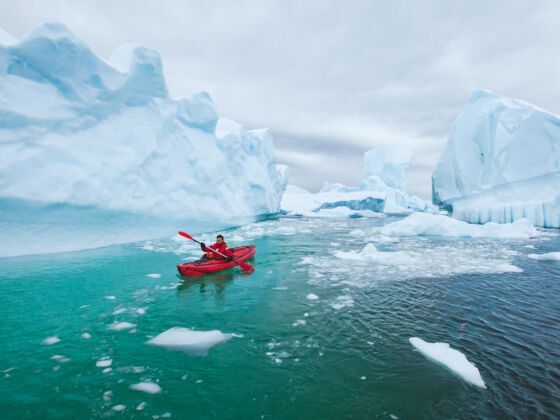
The world’s rapidly-shrinking glaciers are the most stunning evidence, visually and scientifically, of global climate change.

From the poles to the tropics, these ancient and monumental glaciers are going fast. Their disappearance will have drastic consequences for our planet.

Furtwangler Glacier, Tanzania

Photo by twocentsworth

The once impressive ice field atop Mt. Kilimanjaro, Africa’s tallest peak, will soon be a thing of the past. In the last 100 years, over 80% of the glacier has disappeared, and estimates put its swan song somewhere between 2010 and 2020.

If you ever want to lay eyes on the famed “snows of Kilimanjaro,” you’d better go now.

Aletsch Glacier, Switzerland

Photo above by Jo Simon

Covering an area of 120 square kilometers, this is the largest glacier in the Alps. Although it’s only retreated 2.6 kilometers since 1880, 30% of that reduction has occurred in the past 25 years, with an average pace of 50 meters per year.

The good news is that the Aletsch Glacier should still be around next century. The bad news has to do with moraines, large lakes of glacial meltwater trapped behind dams of ice. When the dams melt to the point of breaking, the released water can cause tremendous flooding, already a problem in the Alps.

Glacier National Park, Montana, USA

Photo above by jurek d

Count tourism among the victims of global warming. Of the 150 or so glaciers documented in Glacier National Park in the mid-1800s, fewer than 30 remain today. What’s more, climate models foretell that by the year 2030, they will vanish completely.

The region’s inherent beauty and geological importance are hard to diminish, but will Glacier National Park maintain the same draw if it has no glaciers to call its own?

Columbia Glacier, Alaska, USA

Photo by zrim

This massive tidewater glacier stretches for 50 kilometers from Alaska’s Chugach Mountains to Prince William Sound. Since 1980, it has retreated 15 kilometers, and scientists predict another 15 kilometers will be lost over the next decade and a half before equilibrium is reestablished.

As the glacier retracts, icebergs are discharged into Prince William Sound. While they are an impressive sight, these floating hazards threaten shipping lanes and may have played an indirect role in the Exxon Valdez oil spill of 1989.

Greenland and Antarctic Ice Sheets

Photo above by giladr

Combined, the ice sheets of Greenland and Antarctica account for 99% of the planet’s glacial ice. Needless to say, what happens to these sheets affects the entire world, and news in recent years hasn’t been encouraging.

Both have dumped massive amounts of ice into the ocean, with the high-profile loss of Antarctica’s Larsen B Ice Shelf in 2002 attracting global attention and bringing the question of climate change to the forefront.

Photo above by tgraham

More ice in the oceans means rising sea levels, and with the current rates of melting, we can expect an increase of about 5 mm per year and as much as a meter total by the end of the century.

Already, low-lying Pacific Island nations like Tuvalu are feeling the effects, watching as their land is slowly consumed by the sea.

Qori Kalis Glacier, Peru

Qori Kalis is the main glacial outlet of Peru’s Quelccaya Ice Cap, the largest tropical body of ice in the world.

Having seen a reduction in area of 20% in just 30 years, the entire ice cap is now shrinking at alarming rates, and Qori Kalis is leading the retreat at 155 meters per year.

Given that millions in the region rely on water from the glacier for hydroelectricity, crop irrigation, and drinking water, it would be a serious disaster should Qori Kalis go the way of Chacaltaya, a glacier in neighboring Bolivia that’s expected to melt into oblivion in the next five years or so.

Gangotri Glacier, India

Photo above by huggy47

One of the largest glaciers in the mighty Himalayas, the Gangotri is being watched closely by climatologists.

As the primary source for the Ganges River, on which 500 million people in India and Bangladesh depend for freshwater, its continued existence is vital.

Unfortunately, increased global temperatures have spurred its rate of retreat to 30 meters per year in recent decades, and the ice fields of the Himalayas are among the fastest receding in the world.

Tasman Glacier, New Zealand

New Zealand, epic destination for the outdoor enthusiast, isn’t immune to glacial retreat.

The relatively low altitude (730 meters) of the Tasman Glacier, the country’s largest, means it’s been hit hard by global warming. Each year, Tasman loses 180 meters.

As of now, skiing the Tasman is still marketed as “the definitive New Zealand alpine adventure.” Will it be in a few decades? Many glaciologists think not.

Photo above by awiemuc

O’Higgins Glacier, Chile

The outlook in Patagonia is grim, with many scientists pointing to glaciers in this region as the fastest receding in the world.

Chile’s O’Higgins Glacier, located in Bernardo O’Higgins National Park and one of the primary bodies in the Southern Patagonian Ice Field, is no exception, having lost 8 kilometers during the last 40 years.

Photo above by vtveen

Community Connection

Want to help save the glaciers? Here’s a good starting point.

For a from the ground perspective Chile’s shrinking glaciers, check out Matador managing editor Julie Schwietert-Collazo’s recent post, Global Warming Is Real.


    Share

About the Author

Matador ID: halamen

Freelance writer Hal Amen co-edits Matador Trips. His personal travel blog is at WayWorded.

8 Comments... join the discussion!

  • tom replied on December 6, 2008

    These photos are incredible!

    (Report comment)

    ↵ Reply
  • Alan replied on December 7, 2008

    This will have a huge impact on the people who depend on these glaciers as sources of fresh water. Too bad people are ignoring this a bit because of the whole economic meltdown.

    (Report comment)

    ↵ Reply
  • Hal replied on December 8, 2008

    Thanks for the comments. Alan, I agree that the glacier-freshwater connection is a huge issue, one that doesn't get near enough news coverage.

    (Report comment)

    ↵ Reply
  • Tom Allen replied on January 13, 2009

    It's more than just the loss of fresh water – glacial melting will account for 60% of sea level rise this century. Sixty percent!

    (Report comment)

    ↵ Reply
  • Susan replied on December 21, 2009

    Why are there so many people that are not worried about climate change? Melting of the world’s glaciers will greatly affect everyone on this planet.

    (Report comment)

    ↵ Reply

Leave a Comment

Get Matador in your inbox and around the web.

Sign up for our FREE weekly newsletter.


View full list of RSS feeds

Jump To Category:


Explore the Community


Popular Stories on Matador

8 Travel Products with Dodgy Ethical Records

Make your packing list and check it twice...... 

Working with the Deaf in Vietnam

"Bright, highly capable kids like Thien are fated to be... 

America's Largest Climbing Gym Opens in Atlanta

Stone Summit has over 30,000 square feet of climbing su... 

MatadorTV vlog 8

Live from the Pike Place Market in downtown Seattle.... 

How To Travel The World For Free (Seriously)

World travel can be much cheaper and far less stressful... 

Urban Homesteading: Turn Your City Home Into Country Living

Who says you can't have a farm in the backyard of your ... 

How To Know When You're NOT Ready To Pack Up & Go?

Just ask yourself two very simple questions.... 

7 Really Weird Religions You Haven't Heard Of

The imagination knows no limits, so people will search ... 

Dog Meat and Rooster Balls: The 10 Most Exotic Asian Foods

From Indonesian bats to Taiwanese rooster balls, these ... 

Photo Essay: Daily Life Around Monasteries in Burma

What do monks and nuns do when they aren't meditating? ... 


Focus


Blogroll


Editor Blogs